
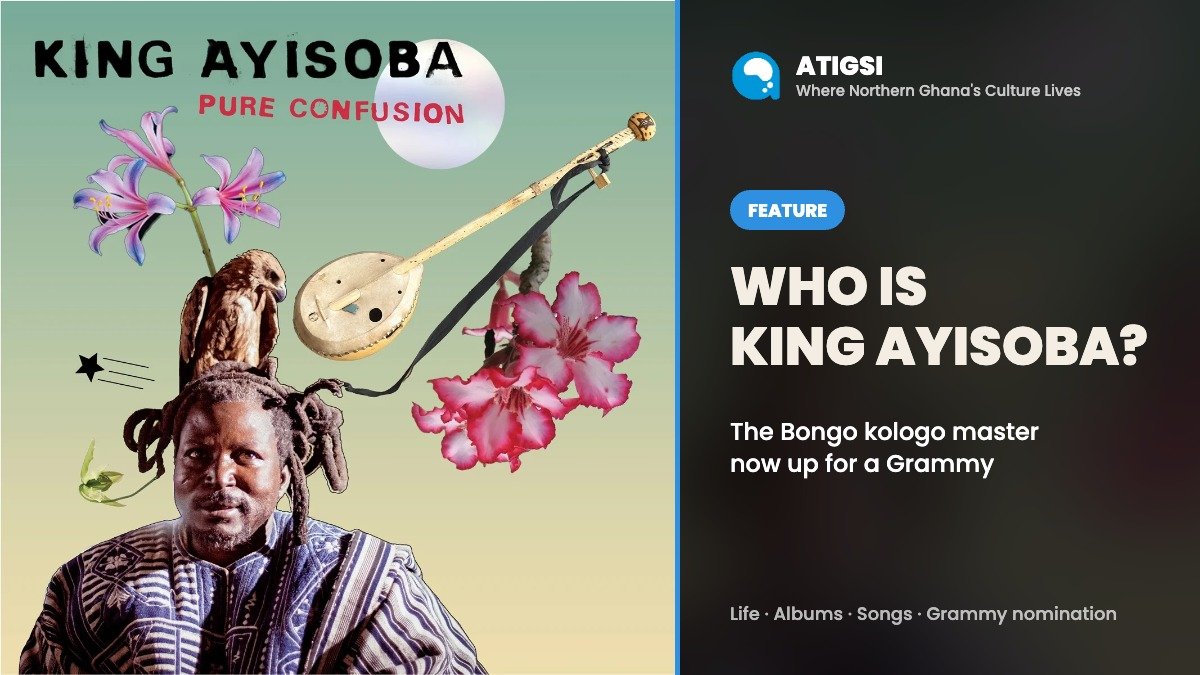
King Ayisoba is a Ghanaian musician from Bongo in the Upper East Region and one of the best-known players of the kologo, the two-stringed lute of the Frafra people. Over two decades he has taken that small instrument from village markets and funerals to festival stages across Europe, and in November 2026 he earned his first Grammy nomination. This is his story: where he comes from, how he learned to play, his albums and the songs that made his name.
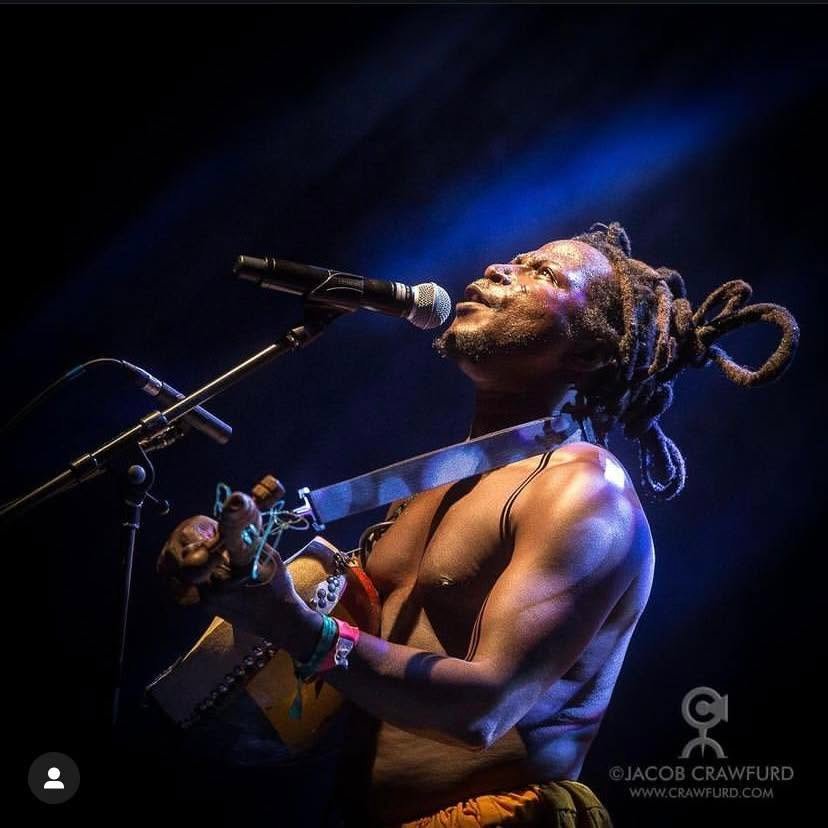
King Ayisoba at a Glance
- Real name: Albert Apoozore
- Born: around 1974
- Hometown: Bongo Soe, Upper East Region, Ghana
- Instrument: kologo (also plays guitar and the gombe drum)
- Languages he sings in: Frafra (Gurune), Twi and pidgin English
- Breakthrough song: “I Want to See You My Father”
- Latest album: Pure Confusion (2026)
- Grammy nomination: Best African Music Performance, “No Tradition, No Africa” featuring Rocky Dawuni (69th Grammy Awards)
Early Life in Bongo: The Boy and the Kologo
King Ayisoba was born Albert Apoozore in Bongo Soe, a farming community near Bolgatanga. In interviews he has told how the kologo came into his life before he could walk. As a small child he was slow to start walking, and a ritualist advised his father to give him a kologo. His father made sure he got one, and he has played it ever since.
He grew up herding the family’s sheep and cattle, playing as he grazed them. As a young man he took the instrument to local markets, bars and funerals, where kologo players have long entertained and told stories, before moving south to Kumasi and then Accra to try his luck in the music industry.
What Is the Kologo?
The kologo is a two-stringed lute played across the Upper East, especially among the Frafra. Its body is made from a gourd covered with animal skin, with a long wooden neck, and it is plucked to produce a dry, buzzing, hypnotic sound. Players often sing proverbs, praise and social commentary over its repeating patterns. King Ayisoba has played a big part in taking the instrument to a global audience, and a new generation is now taking it in fresh directions, from kologo fusion to the work of Upper West star Wiyaala.
The Breakthrough: “I Want to See You My Father”
In Accra, King Ayisoba met the producer and engineer Panji Anoff, and the partnership changed his career. His debut, Modern Ghanaians (2006), carried the song “I Want to See You My Father”, a hit inspired by his late collaborator Terry Bonchaka. At the 2007 Ghana Music Awards he won Song of the Year and Traditional Song of the Year, a remarkable result for a kologo musician singing mainly in Frafra.
King Ayisoba Albums
Since then he has released a steady run of records, many of them through European labels:
- Modern Ghanaians (2006): the breakthrough, with “I Want to See You My Father”
- Africa (2008): pushed his kologo into hiplife and electronic beats
- Don’t Do the Bad Thing (2012)
- Wicked Leaders (2014)
- 1000 Can Die (2017, Glitterbeat Records): produced by Arnold de Boer, with Lee “Scratch” Perry on the title track and Orlando Julius on saxophone
- Work Hard (2023, Glitterbeat Records): begun in the Netherlands and finished in Ghana, with Ras Kuuku and Twinkle on “Good Things God Knows”
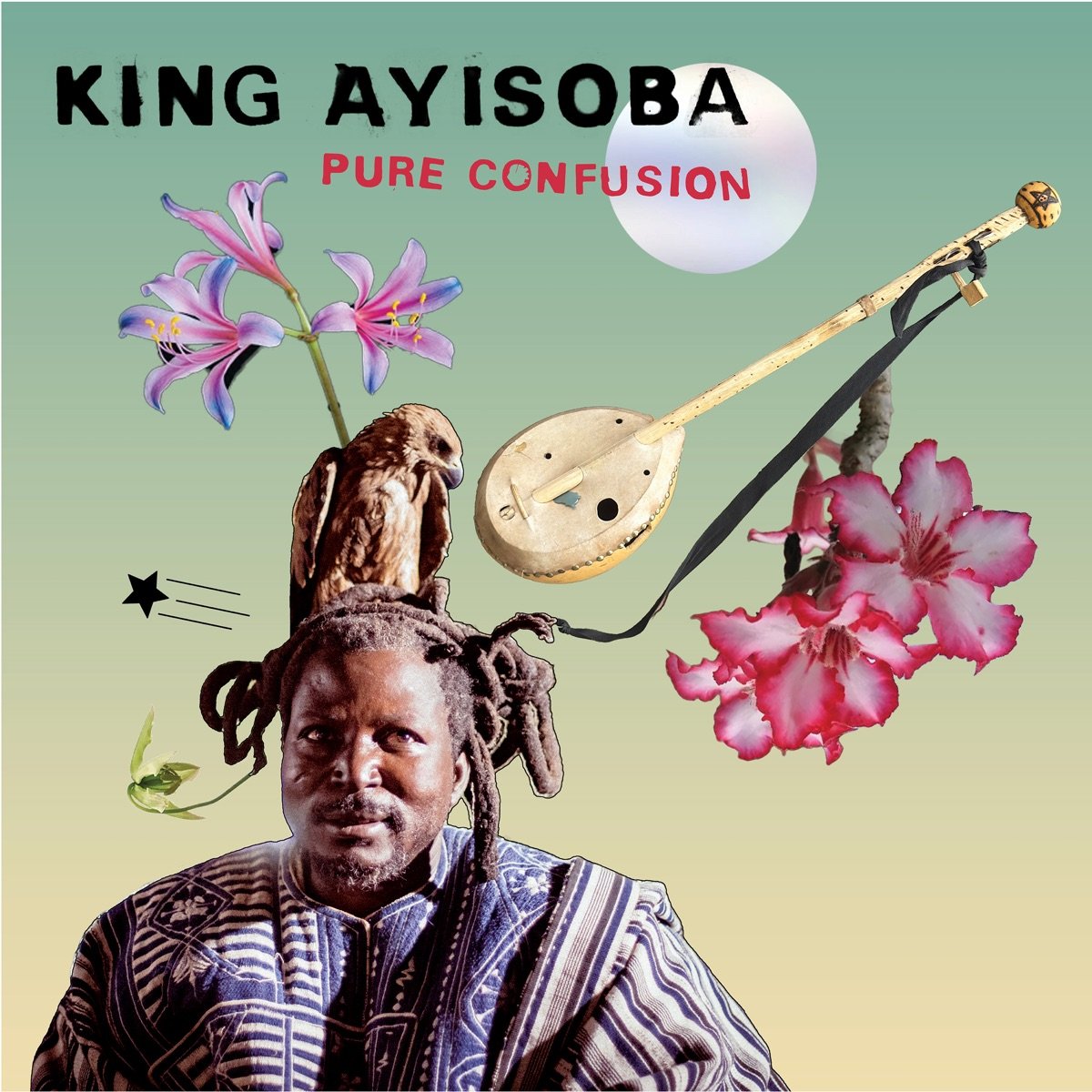
- Pure Confusion (2026, Mais Um): produced by Adrian Sherwood of On-U Sound, recorded largely live at his studio in Ramsgate, England
His lyrics move between the spiritual and the political. Songs on Work Hard deal with faith, corruption, cross-border crime and broken election promises, as well as Northern customs such as traditional marriage rites.
Taking the Kologo to the World
King Ayisoba has performed in the United States, China and Russia and at major European festivals including Roskilde in Denmark and Fusion in Germany. In 2026 he took Pure Confusion on tour in Europe. At home, he founded the Batakari Festival in 2008 to celebrate the smock and the fashion of the Upper East.
He has also lent his voice to other artists. “Africa Needs Africa” brought in Wanlov the Kubolor and Big Gad, and “Batakari Africa” united him with fellow Upper East voices Atongo Zimba and Wiyaala.
The Grammy Nomination
In November 2026 the Recording Academy nominated “No Tradition, No Africa”, his song with Rocky Dawuni, for Best African Music Performance at the 69th Grammy Awards. Produced by Panji Anoff, the song is a call to protect African identity and tradition. It is King Ayisoba’s first nomination, and the winner will be announced on 7 February 2027 in Los Angeles. Read our full story on the nomination.
Frequently Asked Questions About King Ayisoba
What is King Ayisoba’s real name?
His real name is Albert Apoozore.
Where is King Ayisoba from?
He is from Bongo Soe, near Bolgatanga in Ghana’s Upper East Region. He sings mainly in Frafra (Gurune).
What instrument does King Ayisoba play?
He plays the kologo, a two-stringed lute from Northern Ghana. He also plays guitar and the gombe drum.
Has King Ayisoba won a Grammy?
Not yet. “No Tradition, No Africa”, featuring Rocky Dawuni, is nominated for Best African Music Performance at the 69th Grammy Awards, and the winner will be announced on 7 February 2027.
What are King Ayisoba’s most famous songs?
His best-known songs include “I Want to See You My Father”, “Africa Needs Africa”, “1000 Can Die” and the Grammy-nominated “No Tradition, No Africa”.
What is King Ayisoba’s latest album?
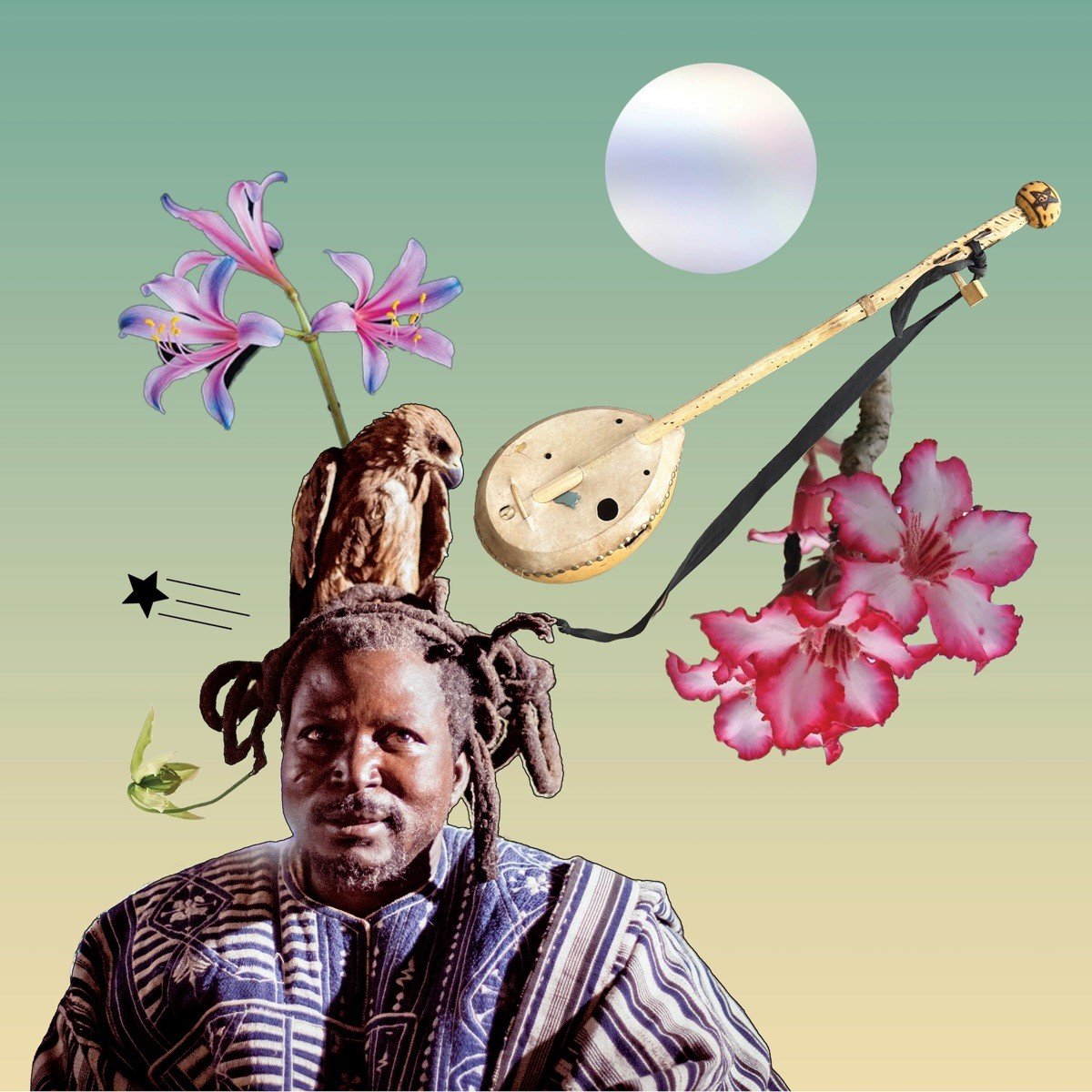
His latest album is Pure Confusion, released in September 2026 on Mais Um and produced by Adrian Sherwood.
🎧 Listen now: Pure Confusion on Apple Music
More from the North: King Ayisoba and Rocky Dawuni Earn Grammy Nomination for “No Tradition, No Africa”